Keep the stakeholder pool relevant. Like traditional materiality, stakeholder consultation and buy-in remain critical to the overall process. Internal and external stakeholder interactions with the business, industry, and in the space are essential reality checks for desktop exercises.
IFRS-focused reporters naturally lean heavily towards investors, shareholders, and finance departments. This is important. However, sustainability issues have far-reaching consequences for individuals and the environment, and neglecting the impacts of ‘non-financially relevant’ issues could lead to overlooking critical concerns, undermining the very essence of sustainability reporting. As such, it is important to keep the stakeholder pool balanced and inclusive by involving customers, suppliers, programme partners, civil society members, NGOs, government representatives, industry experts, the media, and other critical voices.
Gathering input requires a balanced approach. When carrying out the process, sustainability teams need a partner to bridge the knowledge gap on financial materiality. Whether that partner is the risk, finance, or legal department, true integration means understanding how risk management is structured and where risk ownership sits within the organisation, then involving key parties at specific steps where they bring most value. Close coordination between risk management and ESG functions is essential for a comprehensive and effective assessment.
Beyond ownership of the DMA process, it is critical to secure leadership accountability (Board-level buy-in) as well as operational realities (input from strategy owners, division heads, and ground teams). Depending on company structures and appetite, this engagement can cover one-to-one consultations, surveys, and workshops. In our experience, workshops and one-to-one interviews are still most effective for external engagement to understand the depth and breadth of key issues. Surveys are useful for casting a wider net that can help to corroborate findings, but we also regularly caution our clients not to over-rely on surveys unless the organisation is confident that every respondent is well-versed with the material issues and their complexities.
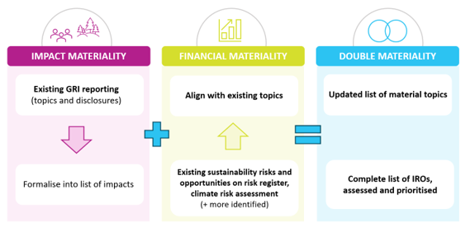
Plan beyond the matrix. Once the process has produced the double materiality matrix or list, the next sustainability report is ready to reflect the findings. But this is just the first milestone that should be treated as a temporary finish line.
The real work lies in translating these results in a way that is meaningful for the organisation. This could involve upgrading existing risk registers with the expanded list of identified sustainability risks and opportunities, prioritising IROs for a more in-depth understanding of specific issues (e.g. through further quantification or scenario analyses), or developing a roadmap for full IFRS reporting alignment. The hope is that teams can take away the true value of the process instead of treating it as a check-box exercise, recognising that the first DMA is the foundation for an iterative, ongoing process.
In conclusion: make the first steps count. The convergence of sustainability and financial reporting is still in its early days. This is an opportunity for reporting companies to give IFRS-integration the depth and colour it demands by undertaking a meaningful double materiality assessment, that is sensibly aligned with company resources. This does not need to be a daunting hurdle if companies design a practical process that uses GRI reporting as the launchpad and ERM frameworks as the financial tool, bolstered by stakeholder knowledge and buy-in. Done well, the DMA is the vital first piece towards treating impact and finance as two sides of the same coin, and in turn, lays brick for effective ESG risk ownership, management, and communication.
Download PDF